Multi Apping in South Florida: Running Two Platforms Without Burning Out
Somebody's told you to run two apps at once. Maybe another driver at the airport lot, maybe a comment on a Facebook group. More requests, more money, but less downtime. It's one of the first pieces of advice new drivers hear, and honestly, it's not bad advice. It's just not complete.
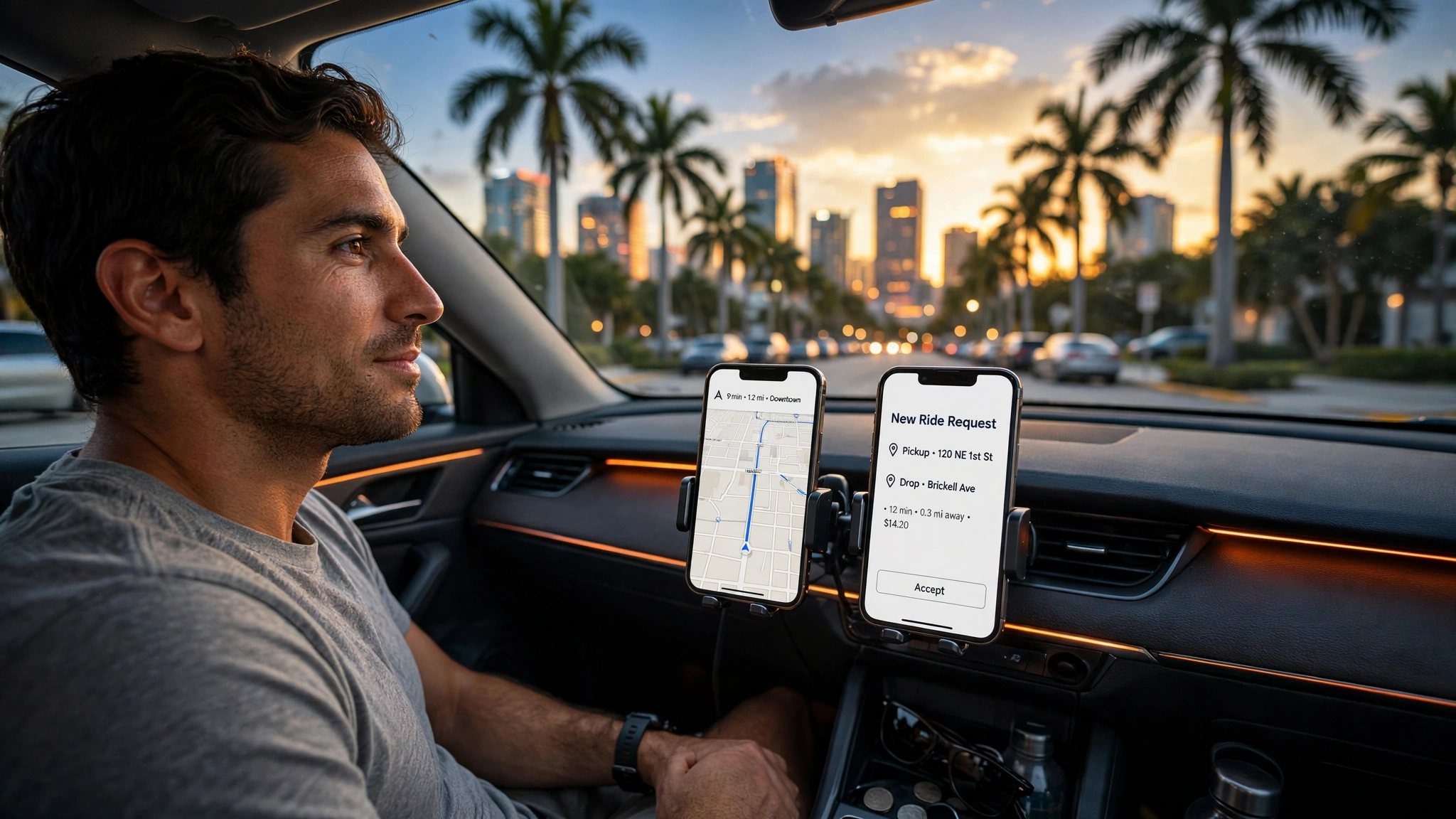
Ask a driver who's actually done it for three or four months straight and you'll get a messier answer. Two phones going off at once. A ride from app A pulling you fifteen minutes away right when app B was about to surge. A day that felt twice as long but didn't pay as much. Multi apping can absolutely work in a market like Miami, Fort Lauderdale, or Palm Beach, where demand jumps fast between neighborhoods and events. It just works a lot better when you go in with some kind of plan instead of downloading a second app and figuring it out on the fly.
Why People Try It
If one app's quiet, maybe the other one isn't. Nobody wants to sit parked for twenty minutes staring at a screen that isn't moving. And in a place with this much tourism and event traffic, one platform can be dead in Wynwood while another is popping off three miles away in the Gables.
None of that reasoning is wrong. Where it falls apart is usually in the execution, not the idea.
The Part Nobody Really Warns You About
Simply installing two apps is not enough to run them. It takes attention. And attention runs out. Maybe not in hour one, but by hour six or seven, most people are running on fumes mentally even if their body still feels fine.
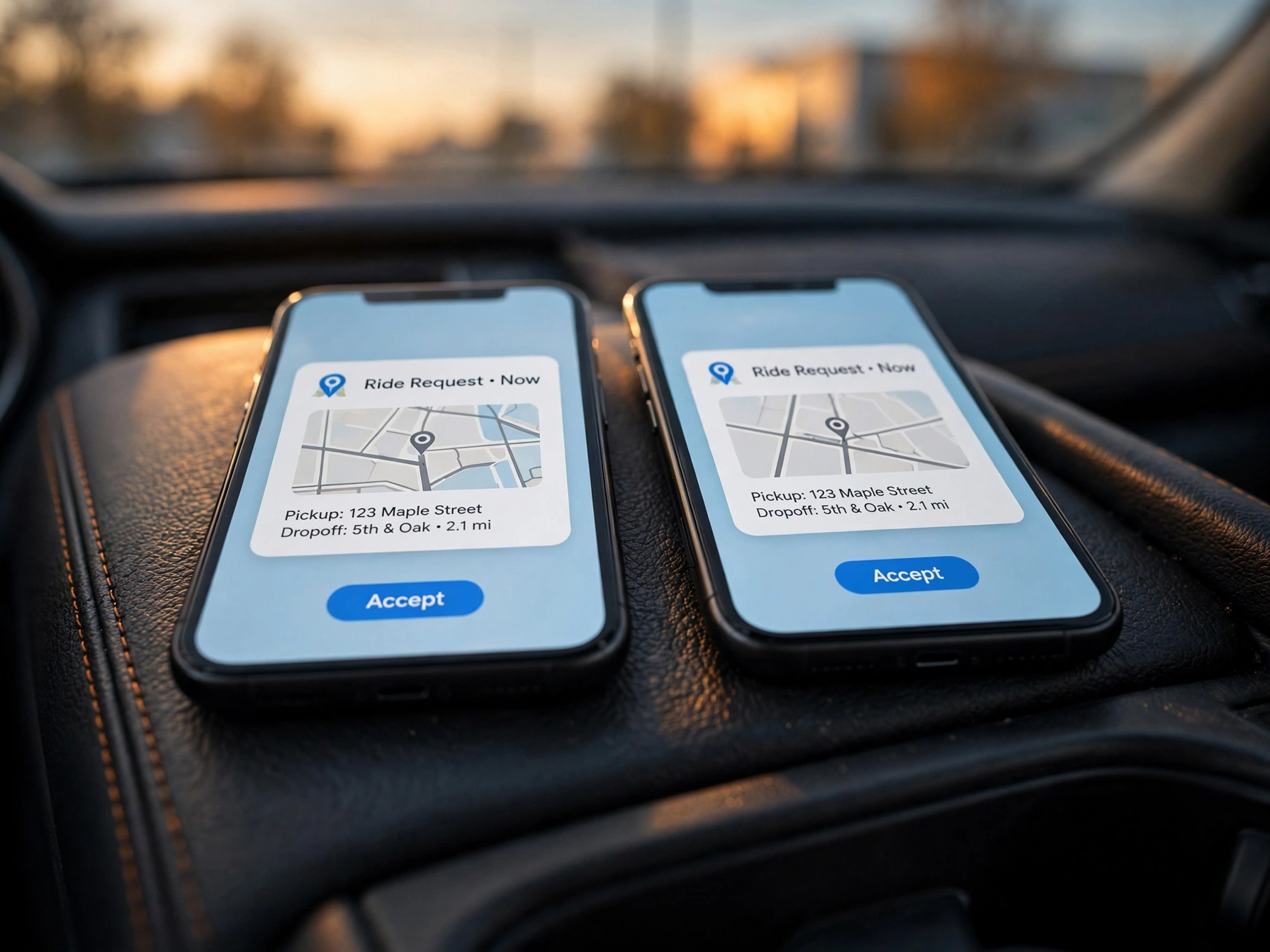
Talk to enough drivers and you'll hear the same handful of complaints come up again and again. A request comes in on one app right as you're already mid-pickup on the other, so you let it expire and lose the streak bonus you were chasing. You lose track of which surge is actually still active because you glanced at the wrong screen. You end up twenty minutes from home because two separate trips happened to pull you in opposite directions. And at the end of the night you're just wiped, even though the hours on paper don't look any different than a single-app day.
None of this means multi apping's a bad move. This means that a method is required for this.
A Way to Do This Without Wrecking Yourself
A little bit of structure changes this a lot. Here's what's actually worked for drivers who've stuck with it long term.
Pick one app as your main and treat the second one as backup, not an equal partner. Default to whatever comes in on your primary. Touch the second one only when the first has quieted down for a long period, not just for a brief pause of a couple of minutes.
Decide ahead of time when you'd even consider switching apps mid-shift. Making that call on the fly, tired, at 9 p.m., usually goes worse than deciding it that morning with a clear head.
Before you even add a second app, spend a week just tracking your dead hours on one. You likely already have a rough idea of when the environment quiets down. Once you know this for certain, you will be able to determine exactly when the second app needs to be launched, eliminating the need to keep both apps running unnecessarily from sunrise until the end of the day.
And set a real stopping point before you start. This is the one people skip most. Multi apping makes "just one more ride" way too easy to justify, over and over, until you've blown past the point where you were actually making good decisions behind the wheel.
Although it's just habit, none of that requires an app or a spreadsheet template. Habit is what actually keeps you from burning out, not which two logos happen to be on your home screen. Drivers should always review requests only when safely parked and follow all applicable laws and platform rules.

What This Actually Does to Your Numbers
Worth being straight about something here. Two apps running does not mean two incomes stacked neatly on top of each other. Every single trip, no matter which platform sent it, carries the same underlying costs.
- Fuel and the wear it puts on your car
- Insurance that actually covers rideshare or commercial use
- Tolls, which pile up fast once you're crossing bridges and highways all day in this area
- Parking during pickups or while you wait
- Self-employment tax that needs to come off the top of every trip, every platform, no exceptions
Whatever's left after all of that is pre-tax profit. Not take-home pay, pre-tax profit. This distinction becomes even more important when you are working with two apps. As the number of trips increases, it is quite natural to feel as though you are earning more than your actual income, especially when there is no precise record of exactly which source the money is coming from. Multi apping raises your volume. It doesn't change the math on a single trip. If anything, it makes tracking earnings and expenses by platform more important, not less, since the two income streams blur together fast once you stop paying attention.
When It's Just Not Worth Doing
There are plenty of situations where a second app adds stress and not much else. If your primary rarely goes quiet in the first place, adding a second one might just be noise you have to manage for no real upside. If you keep missing or declining requests because you physically can't respond to both fast enough, that's your answer right there. Simplify instead of pushing through it.
Multi apping's a tool. It's not a rule every driver has to follow. Some people do their best work heads down on one platform with the occasional side gig filling gaps. Others genuinely do better bouncing between two. What actually matters is whether the schedule holds up over months, not whether one particular Friday night felt great.
The Takeaway
Multi apping in South Florida can absolutely fill in the gaps, especially in a market that shifts around as fast as Miami, Fort Lauderdale, and Palm Beach do. It just works best with something behind it: a primary app you default to, a cutoff time you actually stick to, and honest tracking of what each trip is really costing you once fuel, tolls, insurance, and taxes come out.
If you are looking for an easy way to accurately keep track of your earnings or statistics across multiple platforms, start with RSG Driver Membership and take advantage of specialized tools designed specifically for this purpose.