


In 2025, riders paid meaningfully more per trip, platform fees per trip climbed by roughly a third, and driver gross pay rose by low single digits. The money did not vanish. It moved from the middle of the transaction to the platform. Understanding where it went is the first step to keeping more of it.
The numbers, laid out plainly

The 2026 Annual Gig Mobility Report from Gridwise put hard figures on something drivers have felt all year. Rideshare customers paid nearly 10 percent more in 2025. Platform fees per trip jumped over 33 percent. Driver gross pay rose 3.6 percent per trip and 4.1 percent per hour. The result is that drivers are logging more hours for thinner rewards.
Sit with that. If a rider hands over ten dollars more per hundred and your side of the ledger moves about three, the remaining seven answers the question every driver asks at the end of a shift.
The parts that did move in your favor
It is not all one direction. Rideshare tips reached an all-time high of $1.58 per trip in 2025, while delivery tips slipped to $4.16 per trip in Q4, near the lowest on record. Rideshare and delivery are diverging, so drivers who split their time need to evaluate each separately instead of averaging them into one blurry number.
Bonus pay per quarter also rose 32.9 percent year over year, from about $239 to about $318, as platforms compete for driver supply through incentives. Bonuses are becoming a bigger slice of total earnings, which changes how you should plan a week.
Why fares going up does not help you
Your pay and the rider's price were unbundled years ago. They are two separate numbers set by two separate systems. The rider sees a dynamic price based on demand, route and their own history in the app. You see an offer based on a completely different calculation. The difference between those numbers is the platform's take, and it is no longer a fixed percentage.
So when a rider tells you they paid $48 for a trip that paid you $19, they are not lying and neither are you. That spread is the business model.
On your side of the windshield this looks like surge that does not translate into better offers, long trips that do not scale your pay the way rider pricing scales, the same route paying differently to two drivers on the same night, and an effective rate per mile that drifts down even when weekly gross looks flat. That last one is the quiet killer. Flat gross with rising costs is a pay cut nobody announces.
The rising cost side nobody puts in a press release
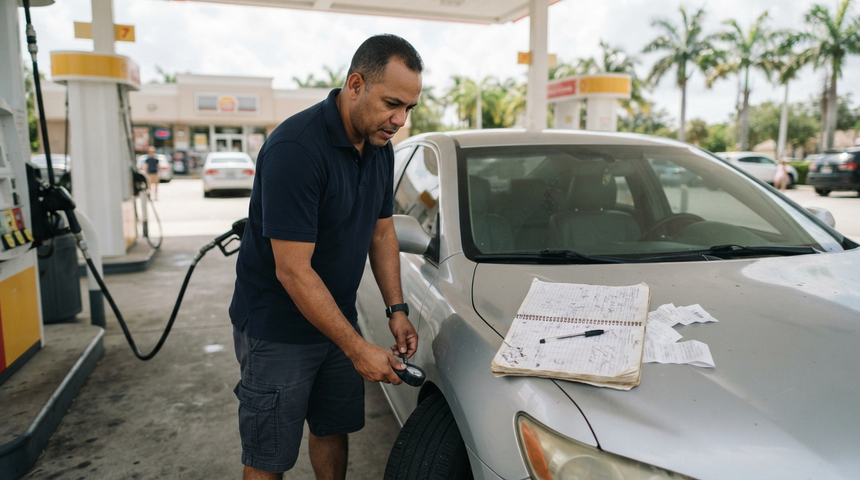
Gross pay is not income. Fuel first, since South Florida traffic means low average speed and worse real-world MPG than any sticker suggests. Insurance next, because rideshare-endorsed coverage costs more and Florida rates have been unfriendly for years. Maintenance is monthly on a rideshare schedule, not annual. Depreciation is the largest cost most drivers never count, because every mile spends down the resale value of an asset you paid for. Then self-employment tax, which you set aside for as you earn or it becomes a crisis in April.
If you have never done this math, do it once. It will change how you pick shifts permanently.
Six ways to protect your take-home

- One. Track net, never gross. Decide your minimum acceptable net per hour and per mile, write it down, and measure every week against it. A driver with a number makes different decisions than a driver with a feeling.
- Two. Treat low offers as a business decision. Below a certain rate per mile, accepting is worse than sitting, because you are spending fuel, tires and resale value to earn less than those inputs cost.
- Three. Chase bonuses deliberately, not emotionally. A promotion requiring 40 extra miles of deadheading can pay less than the shift you would have worked anyway. Do the sum first.
- Four. Separate your rideshare and delivery math. Tipping is moving in opposite directions across the two. Weight your week toward whichever is actually paying you.
- Five. Build income that no platform prices. Every direct booking carries no platform fee, so the entire fare gap goes to you. This is the single highest-leverage change available to a driver right now. Ten regulars will not replace your income, but they change your floor, and a floor is what makes the rest survivable.
- Six. Learn the business side properly. Pricing your own rides, handling cancellations, invoicing a corporate client, keeping records that survive tax season. None of this is taught by an app, because the app benefits from you not knowing it.
Is anything changing at the policy level?
Depends heavily on where you drive. California drivers recently completed the largest single unionization effort in US history, bringing roughly 350,000 Uber and Lyft drivers under a new union, though whether that certification turns into an actual contract is still an open question.
Florida has no equivalent framework and no visible path to one. The practical takeaway is uncomfortable but clear: a rate increase is not arriving from outside. Anything that improves your margin has to be something you build.
Frequently asked questions
Why did my pay drop when Uber raised prices?
Rider pricing and driver pay are calculated separately. Higher fares increase platform revenue without automatically increasing driver pay.
How much are platform fees now?
They vary by trip rather than sitting at one fixed percentage. What is documented is the direction: fees per trip rose over 33 percent in 2025 while driver pay per trip rose 3.6 percent.
Are tips actually going up?
For rideshare yes, reaching a record $1.58 per trip. For delivery no, with Q4 2025 tips near record lows.
Is driving still worth it in 2026?
For many drivers yes, but only with real cost tracking and only with some share of income coming from outside the apps.
What is the fastest way to increase take-home pay?
Cut the fee out of the transaction. Direct bookings carry no platform commission, so the same fare produces materially more income.
The bottom line
The 2026 data confirms what the seat already told you. The spread between what the rider pays and what you keep is widening, and it is widening on purpose. You cannot negotiate with a pricing algorithm. You can build a book of riders who pay you directly, know your name, and never see a platform fee at all.
To keep working on the business side, join the free RSG driver membership as you build a steadier take-home and your own direct rider relationships.
